

White Fish Soup
Shall we cook?
About this recipe
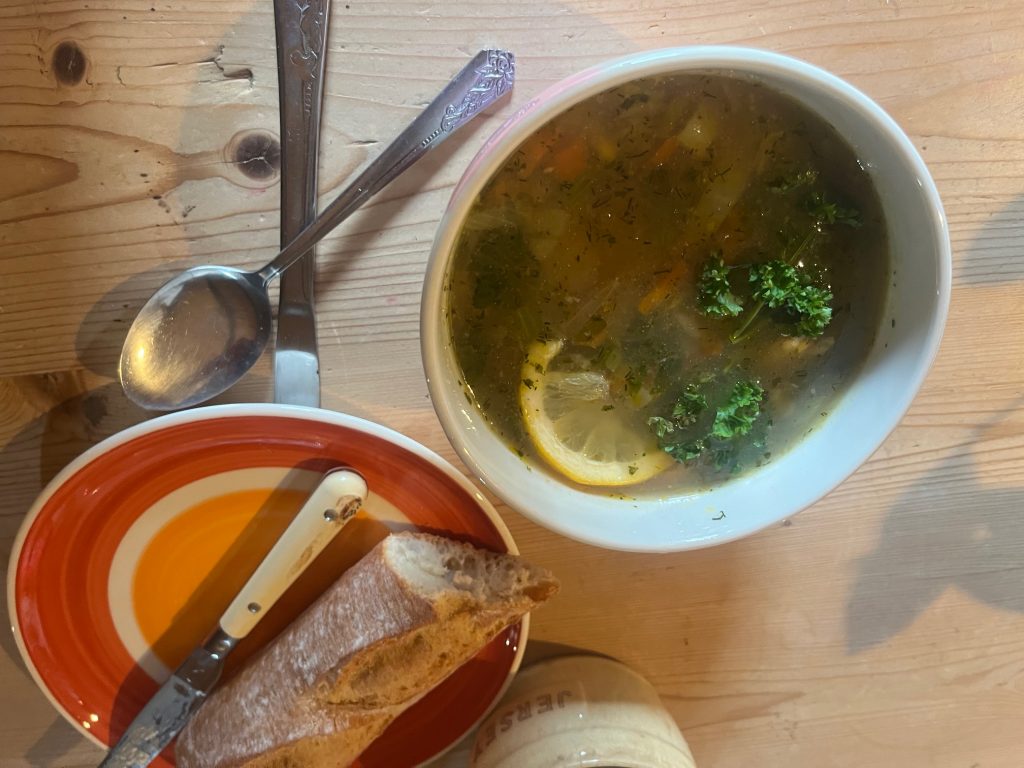
I like this soup very much. It reminds me of my childhood. It’s nothing complicated — just white fish (pollack, cod, haddock, whiting, pouting, sea bass…) cooked with very down‑to‑earth vegetables that grow in the soil: onions, carrots, potatoes. Add a few ordinary herbs — parsley, dill, bay leaves — and you have something humble but deeply comforting.
Compared to any soup made with salmon or halibut, this one is light. Simple, but rich in taste. Just fish and vegetables, nothing more.
When I make it, I always recall memories of camping by the sea: adults cooking dinner in a metal pot over an open fire, the smell of the sea, the sound of the waves, freshly caught fish being cleaned and cooked straight away. The vegetables were roughly chopped, brought from home — not found on the beach, of course.
These days I like to make this soup at home. I always buy fresh fish for it, usually whole fish, because I use the heads, bones, and fins to make a quick broth. But it’s not a crime to use fillets — in fact, if you’re making this soup with fish fillets instead of whole fish, you can skip the trimming and broth‑making steps — it becomes a very fast recipe. In that case, use a good‑quality fish stock from the supermarket. I’m not a big fan of instant soup cubes, so choose a proper liquid stock if you can.
Interested? Follow me then 🙂

Kitchen Equipment
5‑litre pot — this recipe yields about 5 litres of soup
Well‑sharpened knives — for cleaning fresh fish, peeling vegetables, chopping vegetables and herbs
Kitchen scissors — for trimming fish (especially useful for removing fins)
Cutting boards — one for fish; one for vegetables
Colander and cheesecloth — for straining the stock
Three deep bowls — one for strained stock; two for separating the cooked fish
!!! If you’re using fillets instead of whole fish, you won’t need the cheesecloth, scissors and the extra bowls — the soup becomes even quicker.
Ingredients
For the Fish Broth
Whole white fish — 3 fish, preferably of different type (about 500g each). I make my decision at the fish monger counter. My most recent combination was 1 sea bass and 2 gurnards. I made this soup with different combinations of fish, my preference – white simple not rich in fat, too oily or strongly flavoured fish,
Onion — 1 medium
Carrot – 1 small to medium
Bay leaves — 2
Black peppercorns — 5
Ground coriander – tea spoon
ground fenugreek – tea spoon (optional, I add it because I like its flavour and it works well or accompanies well the vegetables)
Sea salt or unrefined rock salt — 1 heaped teaspoon
Herb stems from small bunches of parsley, celery, and dill, or you can use dried herbs.
For the Vegetable Base
Onion — 1 medium
Carrot — 1 medium
Leek — 1 small (or half of a large one)
Potato – 1 or 2 medium size
To finish
Lemon — half – very optional. it is a stereotype: fish comes with lemon.
Garlic — 3 cloves – optional
Fresh parsley — half a bunch
Fresh chili – 1 small finely chopped
Method and Cooking Time
This is a quick recipe in my time scales:
Making the broth takes about 30 minutes, cooling it about an hour, and working with the fish another 20 minutes. Cooking the soup itself takes around half an hour. Altogether, the soup can be ready within 2½ to 3 hours from scratch.
If you skip the broth preparation and use good‑quality stock, the whole soup takes about 30 minutes before it’s ready to serve.
Cooking the Fish Broth
This step is essential if you’re using whole fish. If you’re using fillets, skip this part — you’ll cook the fish together with the vegetables.
Place gutted fish in a large pot together with all the broth ingredients. I use a 5‑litre pot (you can see it in the main photo). Cover the fish and vegetables with cold water, bring to a boil, then reduce the heat and simmer gently for 15–20 minutes. Half an hour is the absolute maximum — sometimes I forget the pot on the hob, but I try not to overcook the fish.
If any froth appears, skim it off with a spoon or ladle.
Switch off the heat, cover the pot, and let the broth cool. You’ll need to handle the fish, so it’s best when it’s warm rather than hot.
Once cooled, strain the broth through a colander or cheesecloth into a large bowl. Cover the bowl and set aside.
Now work with the fish: remove the flesh from the bones, keeping the pieces fairly large or bite‑sized. The more bones you remove now, the fewer you’ll find in your bowl later.
As for the vegetables from the broth — yes, you can use them. I chop them and add them to the soup. I try to minimise waste, especially food waste.
Let’s move on.
Making the Soup
Use the same pot you used for the broth. You may rinse it, though I usually don’t — just make sure no bones remain.
Chop the vegetables. Remember to rinse the leek thoroughly; you don’t want sand in your soup.
I like quartered onions. For carrots, I prefer pieces similar in size to grated carrot, but I slice them with a knife: longways first, then at an angle. I enjoy working with knives. I cut potatoes in a similar way but slightly larger — there should be a difference between carrot and potato, don’t you think? I hope this made you smile.
Leeks depend on my mood: sometimes thin circles, sometimes long strips cut into 1–2 cm pieces. Whichever way you slice them, wash them well afterwards.
Place the pot on medium heat and add a little oil. I’m a big fan of cold pressed rapeseed oil, but extra virgin olive oil or cold pressed sunflower oil also work — the cooking temperature is around 100°C, below their smoke points.
Lightly brown the chopped vegetables, stirring constantly. You don’t want dark, fried onions or carrots in this soup.
At this point, if you’re using fish fillets, add them — cut into bite sized pieces — and stir gently so they don’t break into a “tinned tuna” texture. This stage shouldn’t take more than 5 minutes.
Next, add the cooked fish from the broth, then immediately pour in the broth itself. If you didn’t make your own broth, use either water or a good quality purchased stock. If using water, you may add cooking cubes — though I can’t recommend a type, as I rarely use them.
Bring the soup to a boil, then simmer for 10 minutes. Check that any added fresh fish pieces are cooked.
To Finish
Finely chop the garlic, parsley, and chilli, and sprinkle them over the soup. Add a couple of slices of lemon. Cover the pot with the lid, take it off the heat, and let it rest for 5 minutes while you lay the table.
The soup is ready.
Serving Suggestions
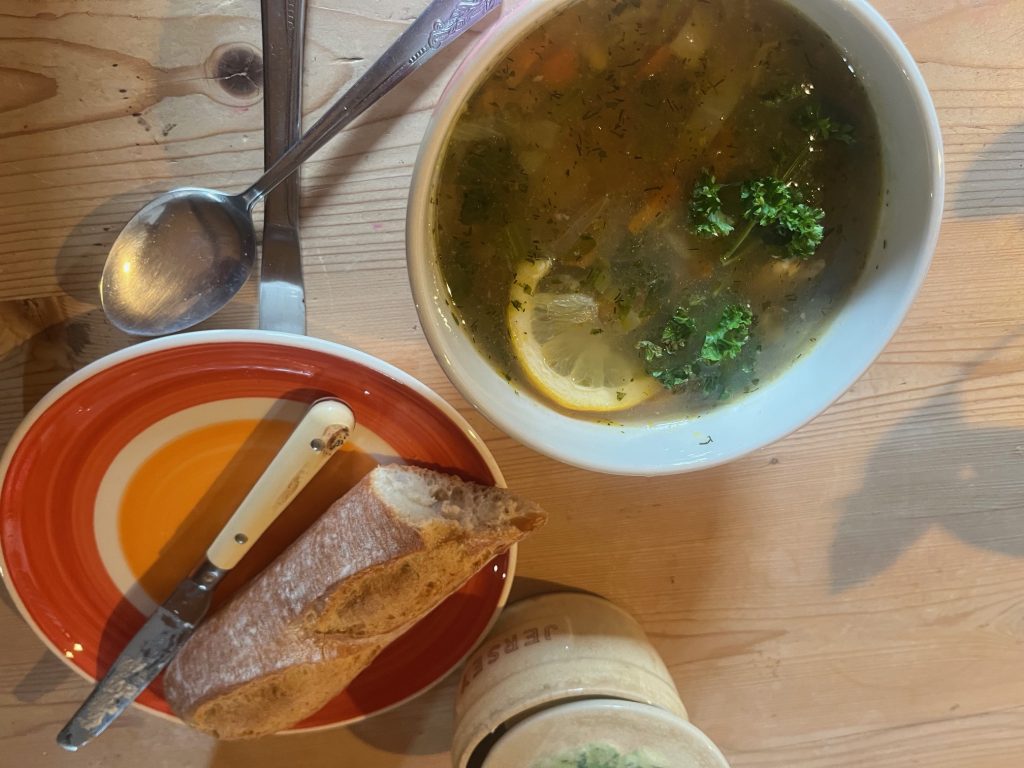
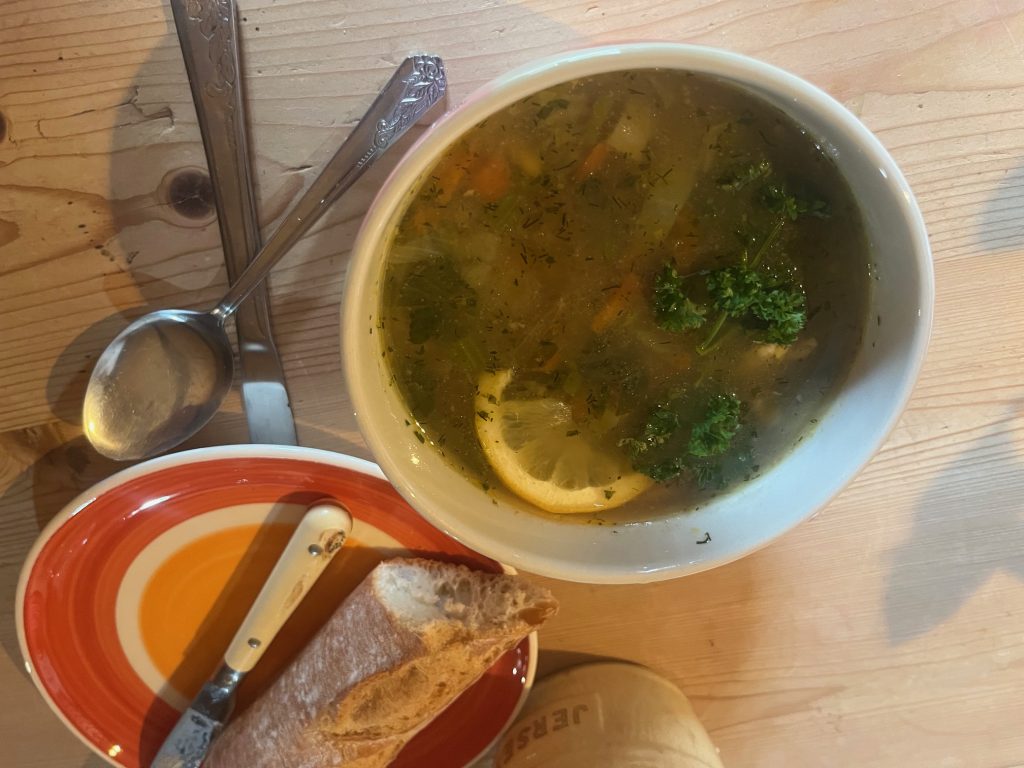
I usually eat this soup with some nice bread. I don’t drink alcohol, but I can imagine that a small shot of cold strong drink — vodka or a Scandinavian herb schnapps — would be absolutely appropriate. Otherwise, drink still water.
It’s a lovely soup for lunch: not too rich, but full of flavour.
Bon appétit.
The Recipe Photos
The fish to be cooked – Looking for the photos
Preparing the fish for the broth – Looking for the photos
Making the broth – Looking for the photos
My notes
My recipes are alive — they grow and change with me. I cook them for myself, my family and my guests, and they’re never exactly the same twice. I add things, remove things, discover new spices, find easier techniques… This is simply how I cook.
This recipe notes:
Just some facts about me:
I can never walk past a fishmonger without stopping. I always buy whole fish — the sellers love me for it, because they don’t have to do any filleting. I buy whatever looks good that day; I simply love fish and seafood. Shopping for fish is never just shopping for me. Whether I’m in Cornwall or Finistère, it’s a small social ritual — greeting the familiar faces behind the counter, chatting with the fishmonger, asking what they recommend today. I don’t rush it. I enjoy it. It’s one of the quiet pleasures of my day.