
My Ways of Curing Fish and Using It in My Kitchen
There might be days when my fridge looks empty — although I should confess, it doesn’t happen very often. But even if it does, there will always be something pickled or cured in there, and usually that includes fish. Cured fish, mainly salted and only rarely smoked, has been on my table since childhood. These days you can find all sorts of smoked salmon, mackerel, kippers, jars of herring and anchovies. Some of them are very nice, but I prefer to cure fish myself. I enjoy the process. I can play with herbs and spices, make the fish comforting or turn it into something useful for cooking other dishes.
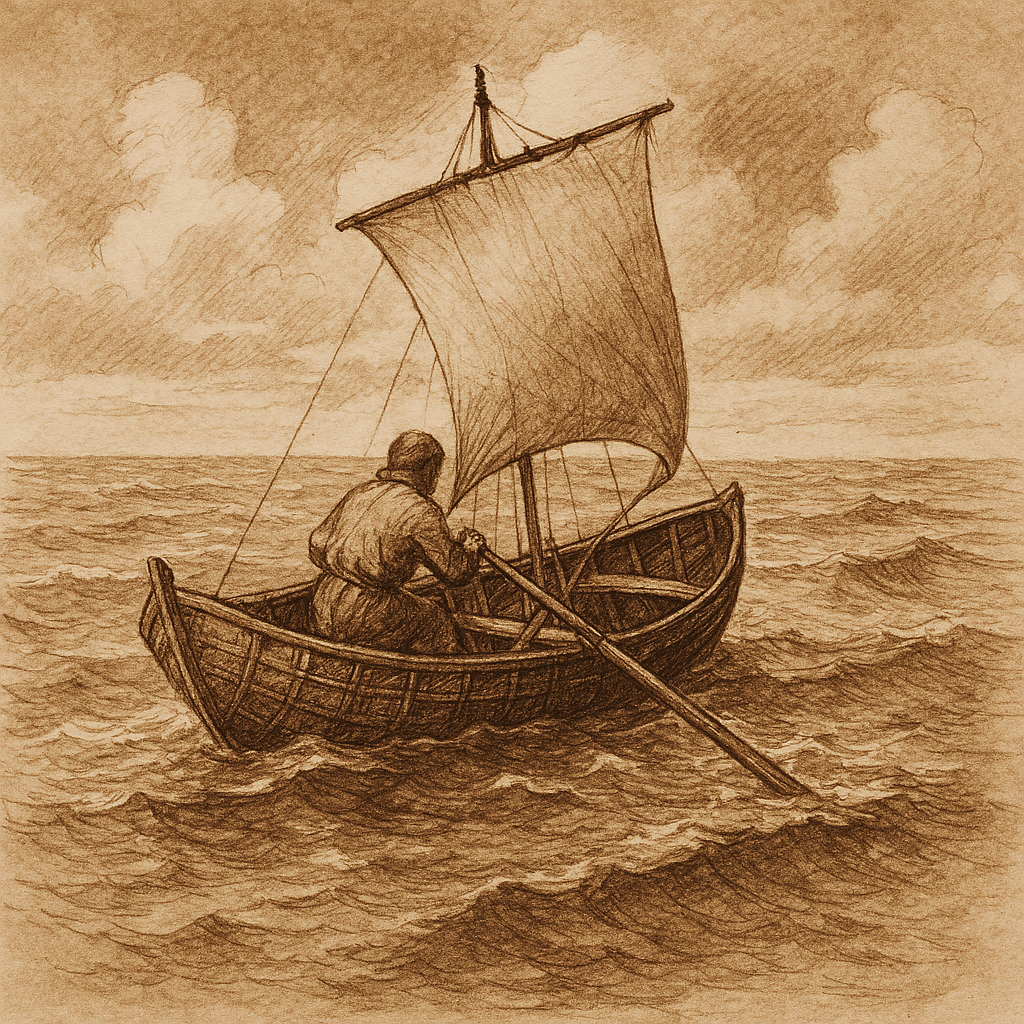
Celtic communities along the Atlantic coast lived in a close relationship with the sea, and fish was a quiet but steady part of their diet. In Ireland, Wales, Scotland, and Brittany, people fished from small boats like currachs and coracles, catching salmon, trout, herring, and mackerel in rivers and open water. They preserved fish by salting, drying, or smoking — simple methods that suited a life shaped by tides and weather. Some of these traditions survive today, especially in river fishing, where ancient techniques are still practised. I like to think that my own curing experiments echo those older rhythms, keeping a small piece of that Celtic food culture alive.
Historical discoveries show that ancient peoples were fishing long before they had fridges, yet they still needed to preserve what they caught. Some nations used barrels of salty water, others living further north froze their fish. I try to follow these old methods — partly to store the fish, but mostly to enjoy the taste. I experiment, I try new things, I let the fish tell me what it wants to become.
In this section of my fish and seafood collection, I’ll share the recipes I use regularly, along with a few that I keep for special occasions.
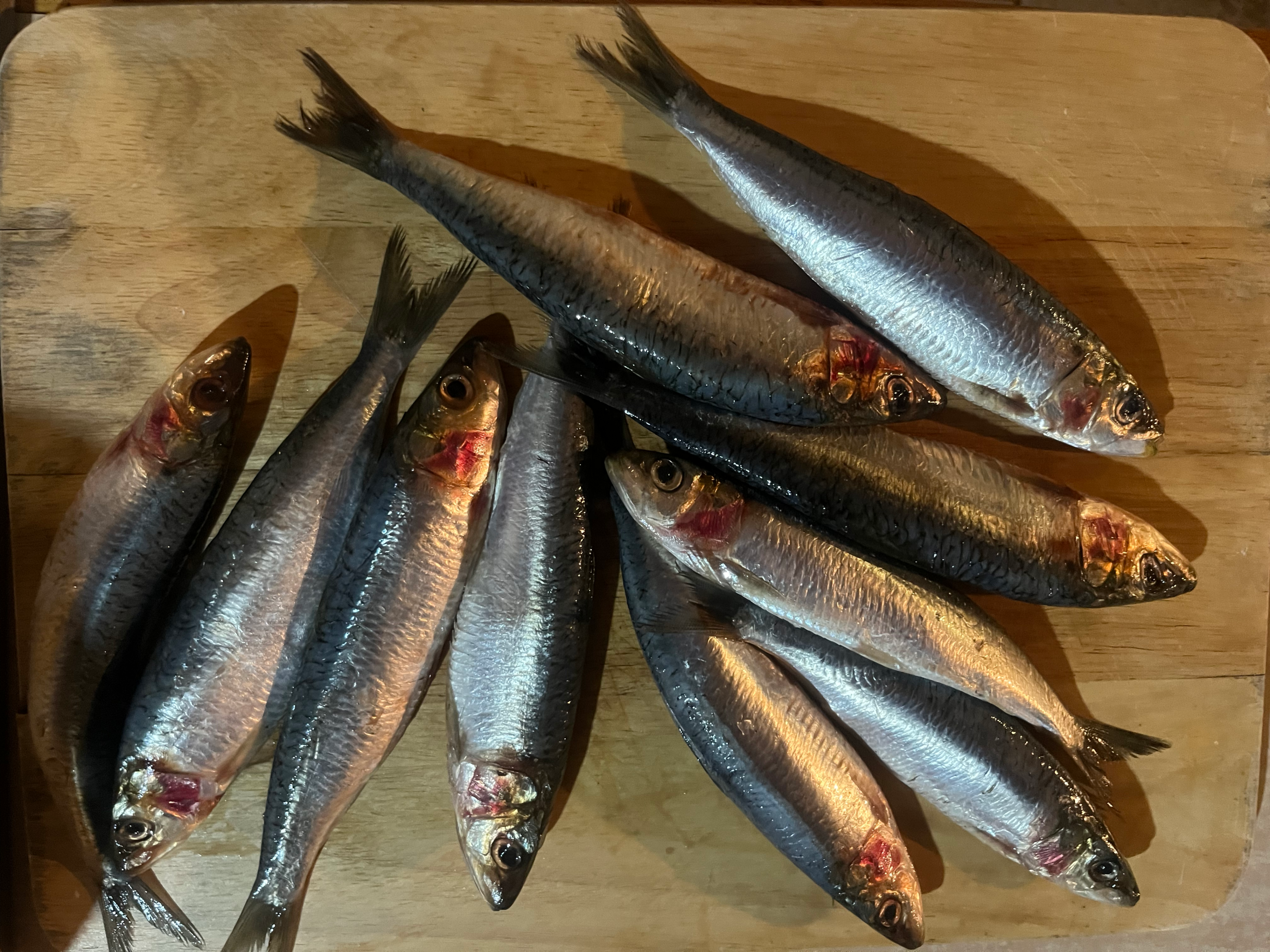
Sardines
Oysters, lemon, and a sharp knife — what could possibly go wrong?
Salmon
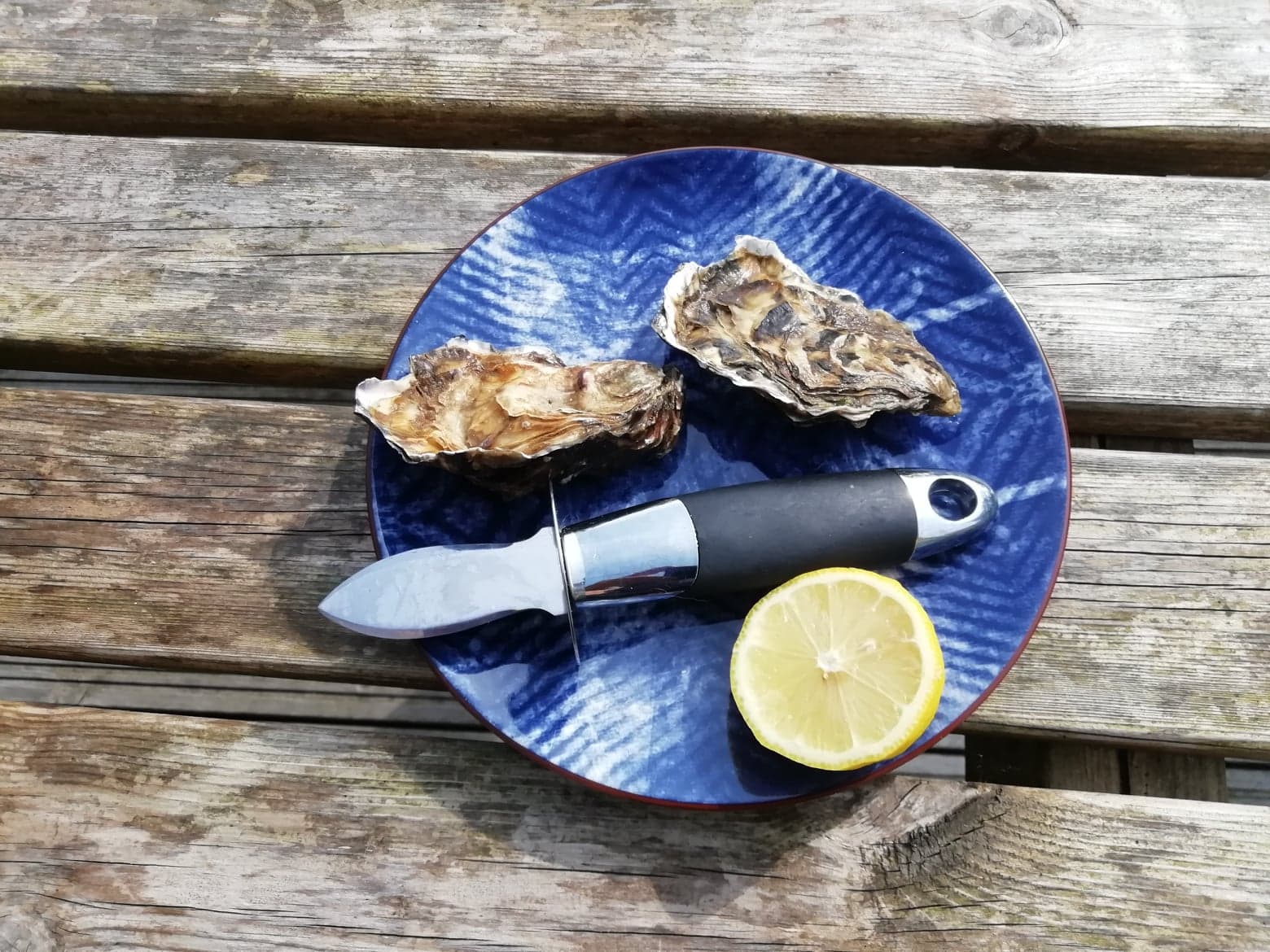
Oysters, lemon, and a sharp knife — what could possibly go wrong?
Sprats
Oysters, lemon, and a sharp knife — what could possibly go wrong?
Anchovies
Oysters, lemon, and a sharp knife — what could possibly go wrong?
Herring
Oysters, lemon, and a sharp knife — what could possibly go wrong?
Some ideas
Oysters, lemon, and a sharp knife — what could possibly go wrong?
My notes
Just some facts
Although the currach is most closely associated with Ireland, related skin‑on‑frame boats were also used in parts of western Scotland and in the Welsh coracle tradition. Brittany and Cornwall, despite their Celtic heritage, developed different maritime cultures and did not use currach‑type boats.
Humans have been eating seafood for far longer than we’ve been farming or building towns. Archaeological sites in South Africa show that people were gathering shellfish around 164,000 years ago, and eating shallow‑water fish at least 140,000 years ago. The earliest clear evidence of active fishing dates to about 162,000 BC, long before hooks appeared around 40,000 BC. Curing, drying, and salting fish are some of the oldest food‑preservation methods we know.