
About this recipe
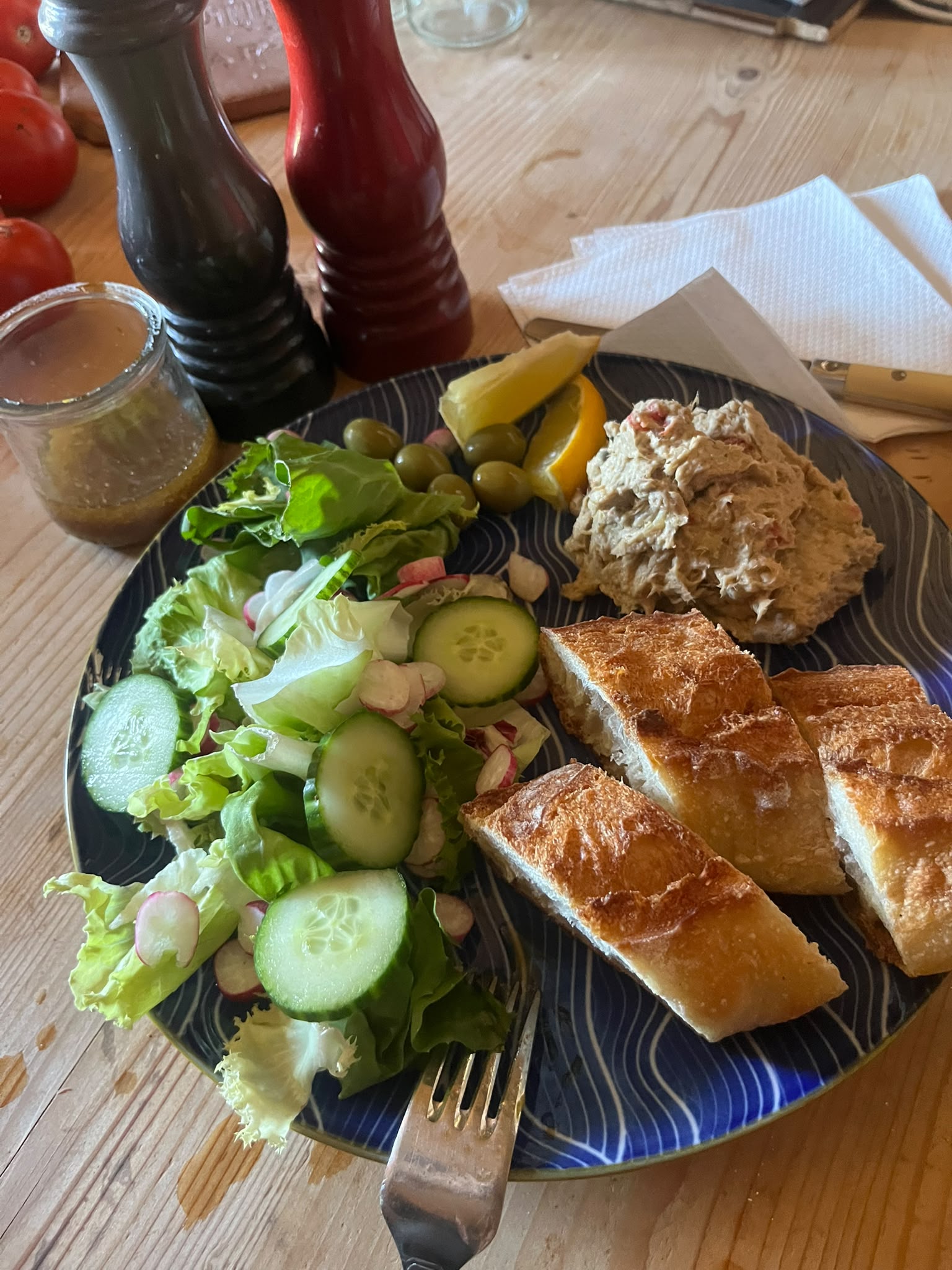
This recipe was born from a preference for light, vibrant seafood spreads without heavy cream or melted butter. Baking fresh local mackerel with seasonal apples, Roscoff onions, sweet peppers, and garden bay leaves allows the natural oils of the fish to blend with soft, aromatic vegetables. The result is a rich, textured pâté with balanced sweetness and acidity — perfect with crusty bread, a fresh green salad, and cornichons.

Ingredients
The Pâté Base
- Fresh mackerel — 2 whole fish (~1 kg total), gutted and filleted
- Sweet bell pepper — ½ to 1 large (red or orange)
- Roscoff onion or red onion — ½ to 1 large, roughly chopped
- Seasonal sweet apple — 1, halved (unpeeled, uncored)
- Garlic — 2 cloves, unpeeled
- Lemon — juice of ½ lemon
Herbs, Oils & Seasoning
- Cold‑pressed rapeseed oil — 2 tbsp total
- Extra virgin olive oil — 1–2 tsp (added during blending)
- Bay leaves — 2 fresh
- Dried dill and ground coriander
- Sea salt — ½ tsp
- Sugar — ½ tsp
- Black pepper (optional: red chili)
Kitchen Equipment
- Baking dish — large enough to accommodate the fillets of two whole mackerel along with the apple, onions, and sweet peppers.
- Well sharpened knives — for gutting and cleaning fresh fish, peeling vegetables, and chopping onions, peppers, apples, and herbs.
- Cutting boards — one dedicated to fish; one for vegetables and fruit.
- Electric food processor or manual mincer — either works perfectly for blending the pâté.
- Two bowls — one for strained stock (if you save the heads and bones), one for separating the cooked fish and roasted aromatics before blending.
- Serving dish — you serve the pâté in the same baking dish used for roasting, giving it a rustic and honest presentation.
Method and Cooking Time
This pâté is easy to make, but it does ask for a little hands-on time and a bit of patience. Nothing complicated — just honest kitchen work and an overnight rest that does half the job for you.
Prep time: ~20 minutes Filleting two whole mackerel (you can buy fillets, but I prefer whole fish — you never know when you’ll find a little caviar), washing the vegetables, and cutting the apples, onions, and peppers.
Baking time: 20 minutes at 180°C Halogen or a regular oven — both work. The fish cooks gently while the vegetables soften and release their sweetness.
Resting time: Overnight (6–8 hours) Once everything is roasted, cover the dish and leave it until morning. When you wake up and feel ready to return to your pâté, the flavours will have settled beautifully. It’s perfect to finish and serve for lunch.
Yield: Serves 2–4 Ideal for a lunch platter, apéritif, or a rustic shared dish with bread, salad, and pickles.
Preparation
- Gut and fillet the mackerel; save heads and bones for stock.
- Coat a deep baking dish with 1 tbsp rapeseed oil.
- Add bay leaves, garlic cloves, chopped onions, pepper pieces, and halved apple.
- Lay the mackerel fillets on top.
- Squeeze lemon juice over everything.
- Season with dill, coriander, sea salt, sugar, pepper.
- Drizzle with the remaining rapeseed oil.
Baking & Resting
- Bake at 180°C for 20 minutes (halogen oven or fan oven with foil).
- Vegetables should soften without collapsing.
- Remove from heat, cover, and let rest overnight to infuse.
Processing & Finishing
- Discard bay leaves.
- Squeeze roasted garlic from its skin into the processor.
- Remove any pin bones from the mackerel.
- Add fish, vegetables, and apple to the processor.
- Pulse to a coarse‑smooth pâté.
- Adjust seasoning; add a touch of olive oil if needed.
- Chill before serving.
Serving Suggestions
- Fresh crusty baguette
- Crisp lettuce or garden salad
- Cornichons or pickles
- A Breton or Cornish Ploughman’s lunch
- Spread on warm toast with a squeeze of lemon
- As part of a seafood platter with smoked fish and boiled eggs
Bon appétit.
The Recipe Photos
The fish to be cooked – Looking for the photos
Preparing the fish for the broth – Looking for the photos
Making the broth – Looking for the photos
My notes
Nutrition for This Recipe:
Approximate values per 100g:
Storage & Shelf Life
These are my personal recommendations
Mackerel in Celtic & Northern Traditions
Mackerel has been part of Celtic and northern European cooking for thousands of years. Along the coasts of Brittany, Cornwall, Ireland, and Scotland, it was one of the most reliable fish of the year — arriving in great shoals each spring and early summer. Families salted, smoked, baked, or gently stewed mackerel to preserve it for several days, often combining it with onions, herbs, or apples, which were common in rural Celtic kitchens.
In old Breton fishing villages, mackerel was known as a “people’s fish”: inexpensive, abundant, and rich in natural oils that made it ideal for simple spreads and rustic dishes. Cornish fishermen often cooked mackerel whole over embers or baked it with cider and herbs, then mashed the leftovers into coarse pastes to eat with bread. In Nordic regions, mackerel was preserved by smoking or lightly fermenting, creating early forms of fish spreads carried on long sea journeys.
Across these cultures, mackerel was valued not only for its flavour but for its symbolism: a seasonal gift from the sea, nourishing coastal communities and inspiring dishes that were humble, honest, and deeply connected to the landscape.
Chef’s Notes
This pâté is one of those recipes that rewards simple, honest work. Nothing fancy, nothing complicated — just good fish, good vegetables, and a bit of patience. If you’re using whole mackerel (and I always do), take your time with the filleting. It’s a quiet, satisfying job, and sometimes you get lucky and find a little caviar. You never know.
When roasting, don’t worry too much about the equipment. Any oven will do — halogen, top oven, grill‑that‑acts‑like‑an‑oven — as long as it gives you steady heat. The fish cooks gently, the vegetables soften, and everything becomes sweet and fragrant.
The overnight rest is not optional. It’s the moment when the flavours settle, calm down, and become friends. In the morning, when you return to your pâté with a clear head and a bit of appetite, it will be ready for you.
And finally — serve it in the same dish you cooked it in. It’s rustic, it’s honest, and it saves water. Don’t you dare wash an extra dish for no reason.
Suggested Variations
I will be updating this list